
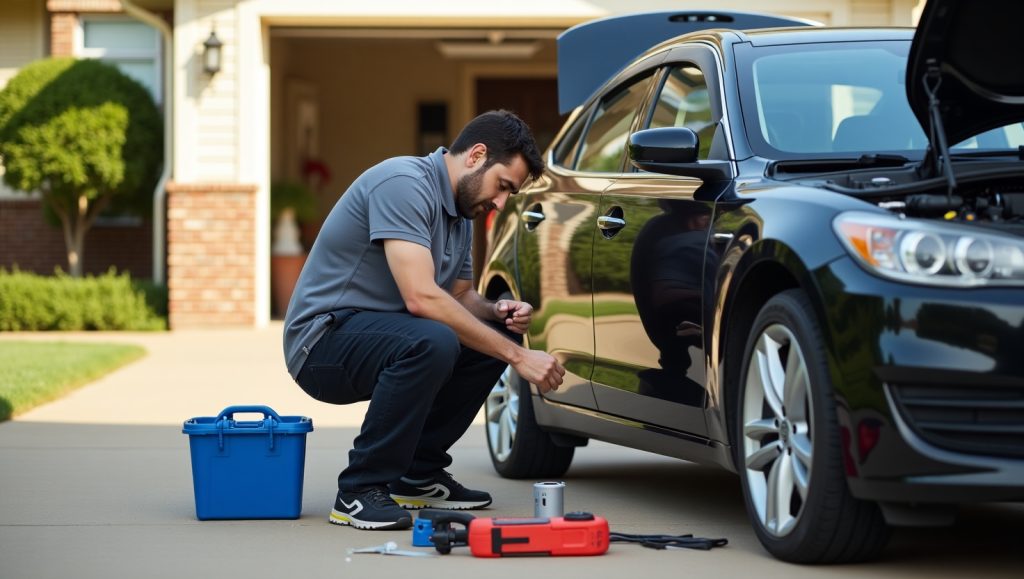
Many drivers become concerned when they press the gas pedal and notice my car hesitate when accelarting. Instead of smooth acceleration, the vehicle may pause, jerk, or respond slowly before gaining speed. This problem can occur during highway merging, pulling away from a stoplight, or climbing a hill.
When my car hesitate when accelarting, it often signals that something within the engine, fuel system, or ignition system is not working correctly. Modern vehicles rely on several interconnected components to deliver smooth power. If even one part begins to fail, it can affect how the vehicle accelerates.
Understanding the common causes can help drivers in Orlando, FL recognize the warning signs early and take action before the issue becomes more serious.
Common Reasons My Car Hesitate When Accelarting
When drivers notice my car hesitate when accelarting, several mechanical issues may be responsible. Some are simple maintenance concerns, while others may require professional diagnosis.
Worn Spark Plugs
Spark plugs ignite the air and fuel mixture inside the engine. If the plugs are worn, dirty, or damaged, the engine may struggle to burn fuel efficiently.
When combustion is inconsistent, the vehicle may hesitate when accelerating.
Signs of worn spark plugs include:
• Slow or uneven acceleration
• Engine misfires
• Rough idling
• Reduced fuel efficiency
Spark plugs naturally wear over time, which is why regular replacement is important.
Clogged Fuel Injectors
Fuel injectors deliver fuel into the engine with precise timing. If they become clogged with deposits, the engine may not receive the correct amount of fuel.
This imbalance can cause hesitation during acceleration.
Drivers may also notice:
• Poor throttle response
• Engine shaking
• Decreased fuel economy
Fuel injector cleaning or replacement may restore proper performance.
Fuel System Problems That Cause Acceleration Hesitation
A healthy fuel system ensures the engine receives the correct amount of fuel under different driving conditions. When any part of this system begins to fail, acceleration can suffer.
Weak Fuel Pump
The fuel pump moves gasoline from the tank to the engine. If it becomes weak or worn, it may struggle to supply enough fuel when the driver presses the accelerator.
Common symptoms include:
• Vehicle hesitates when accelerating
• Difficulty starting the engine
• Sudden loss of power while driving
A failing fuel pump should be addressed quickly to avoid being stranded.
Dirty Fuel Filter
The fuel filter prevents debris from entering the engine. Over time, the filter can become clogged.
When this happens, fuel flow becomes restricted. The engine may hesitate or respond slowly during acceleration.
Replacing the fuel filter at recommended intervals can prevent this problem.
Air Intake Issues That Affect Engine Performance
Engines require the right balance of air and fuel to operate efficiently. If airflow is restricted or sensors malfunction, acceleration may feel sluggish.
Dirty Air Filter
A clogged air filter reduces the amount of air reaching the engine.
This can cause:
• Sluggish acceleration
• Engine hesitation
• Reduced fuel economy
Replacing the air filter is a simple maintenance task that often improves engine performance.
Faulty Mass Airflow Sensor
The mass airflow sensor measures the amount of air entering the engine. It sends this information to the vehicle’s computer so it can adjust fuel delivery.
If the sensor becomes dirty or fails, the engine may receive the wrong fuel mixture. This can cause hesitation during acceleration.
Cleaning or replacing the sensor may solve the issue.

Transmission Problems Can Also Cause Hesitation
Not all acceleration problems come from the engine. In some cases, the transmission may be responsible.
If the vehicle hesitates when changing gears, the transmission may not be shifting properly.
Possible causes include:
• Low transmission fluid
• Worn transmission components
• Torque converter problems
Transmission related issues should be inspected promptly to prevent further damage.
Throttle Body and Sensor Problems
Modern vehicles rely on sensors and electronic controls to manage engine performance.
Dirty Throttle Body
The throttle body controls how much air enters the engine when the driver presses the gas pedal.
Over time, carbon deposits can build up inside the throttle body, restricting airflow.
Symptoms may include:
• Delayed acceleration
• Engine hesitation
• Rough idling
Cleaning the throttle body can often improve throttle response.
Dirty Throttle Body
The throttle body controls how much air enters the engine when the driver presses the gas pedal.
Over time, carbon deposits can build up inside the throttle body, restricting airflow.
Symptoms may include:
• Delayed acceleration
• Engine hesitation
• Rough idling
Cleaning the throttle body can often improve throttle response.
Ignoring Hesitation Can Lead to Bigger Problems
Many drivers ignore early symptoms because the vehicle still runs. However, delaying repairs can lead to more serious issues.
Consider a common example.
A commuter in Orlando noticed occasional hesitation while accelerating onto the highway. At first, the vehicle would pause for only a second before gaining speed.
Over time, the hesitation became worse. Eventually the engine began misfiring frequently.
When the vehicle was inspected, clogged fuel injectors and worn spark plugs were discovered. Because the problem had been ignored for several months, additional engine components required repair.
What began as a small issue turned into a much more expensive fix.
This example shows why it is important to investigate my car hesitate when accelarting as soon as the symptoms appear.

How Mechanics Diagnose Acceleration Hesitation
Finding the exact cause requires a careful inspection and diagnostic testing.
Technicians typically follow several steps:
• Connecting a diagnostic scanner to check engine codes
• Inspecting spark plugs and ignition components
• Testing fuel pressure and fuel delivery
• Examining the air intake system
• Checking sensors such as the mass airflow sensor
• Evaluating throttle body operation
By identifying the root cause, the correct repair can be performed quickly.
Schedule Mobile Mechanic Service in Orlando, FL
Acceleration hesitation should never be ignored. Even small performance issues can become expensive repairs if left unresolved.
Go Mobile Mechanic in Orlando, FL provides convenient diagnostics and repair services for drivers experiencing engine or performance problems. If your vehicle shows signs of my car hesitate when accelarting, scheduling an inspection can help identify the issue quickly.
Contact Go Mobile Mechanic today to request a quote or schedule service and restore smooth acceleration to your vehicle.