
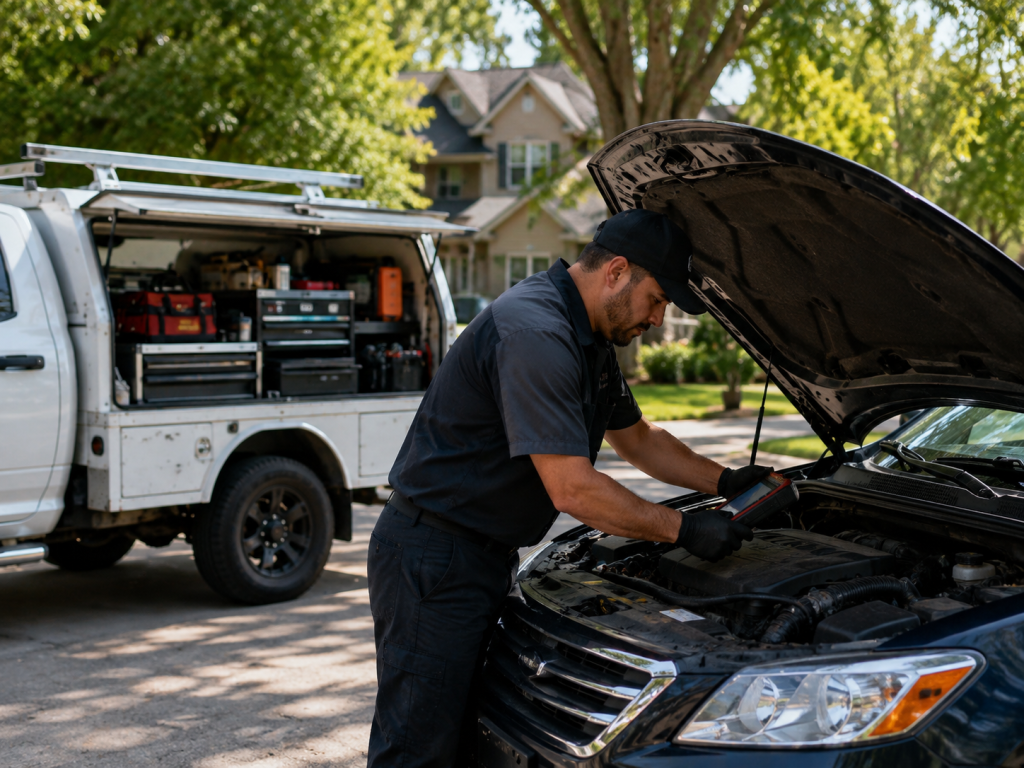
Whether you are flying into Orlando and renting a car or driving in from another part of Florida, the last thing you want on the way to the parks is a warning light on the dash or a flat tire on the shoulder of I 4. A day at Disney or Universal already involves enough waiting in line. Nobody wants to spend part of it waiting on a tow truck instead. A few checks before you leave can be the difference between a smooth trip and a morning lost to car trouble.
Most breakdowns on the way to the parks are not sudden or unpredictable. They are usually the result of something that was already showing signs of trouble before the trip even started, a soft tire, a battery on its last stretch, a coolant level that had been low for weeks. A short inspection beforehand catches almost all of it.
Start With the Tires
Tire pressure matters more on a long highway drive than it does around town, especially with a car loaded down with luggage, coolers, and extra passengers for a family trip. Low tire pressure increases the risk of a blowout at highway speed and also hurts fuel economy at exactly the moment you are burning more gas from the added weight.
Check the pressure when the tires are cold, ideally before you have driven anywhere that morning, and compare it to the number listed on the sticker inside the driver’s door, not the number printed on the tire itself. While you are at it, take a look at tread depth and check for uneven wear, which can be an early sign of an alignment issue. Florida’s summer heat also makes tires more prone to blowouts, since hot pavement adds extra heat to a tire that is already running warm from friction.
Check the Battery Before It Checks You
Florida heat is hard on car batteries in a way a lot of drivers do not expect. Extreme heat accelerates the chemical reaction inside a battery and shortens its lifespan faster than cold weather does in other parts of the country. A battery that would have another year of life somewhere cooler can fail without much warning here.
Slow cranking, dimming headlights, or a check battery light on the dashboard are all worth paying attention to before a long drive. If your battery is three years old or older, it is worth having it tested rather than assuming it will make it through the trip. A dead battery in a hotel parking lot before an early park opening is not how anyone wants to start their day.
Do Not Skip the Fluids
Coolant levels deserve special attention in Central Florida, where engine temperatures climb fast in stop and go traffic near the parks and on crowded highways during peak travel times. Low coolant paired with hours of idling in theme park traffic is one of the more common ways a car overheats on a trip that should have been simple.
Beyond coolant, it is worth glancing at engine oil level and condition, brake fluid, and windshield washer fluid, since Florida’s afternoon rain showers can leave a windshield covered in road grime fast. None of these checks take long, but each one addresses a different way a car can fail mid trip.
Brakes and Air Conditioning Matter More Than People Think
A road trip to the parks usually means a lot of stop and go driving through toll roads, parking garages, and resort traffic, all of which put more wear on brakes than a typical daily commute. Squealing, grinding, or a soft feeling brake pedal are signs worth addressing before you are relying on those brakes in unfamiliar traffic.
Air conditioning is not just a comfort issue in Florida, it is close to a necessity. A car packed with people and luggage sitting in a hot parking lot for hours needs a functioning AC system on the drive home just as much as the drive there. If the AC has felt weaker than usual lately, it is worth having checked before it becomes the reason the whole trip feels miserable on the way back.
Why an On Site Inspection Makes Sense Before a Trip
Fitting a full car inspection into a schedule already packed with park reservations and dining times is not always realistic, which is part of why a mobile mechanic in Orlando is worth considering before a big trip. Rather than dropping the car off at a shop and rearranging plans around a pickup time, a technician can come to the hotel, the rental car lot, or home the day before departure and go through tires, battery, fluids, and brakes in one visit.
This kind of pre trip check is also useful for a reason that has nothing to do with mechanics, it removes the guesswork. Instead of wondering whether that odd noise from last week means anything, a proper inspection gives a clear answer before it becomes a problem on the side of the highway. It is one of the reasons more travelers and locals are learning why mobile mechanics are better than traditional auto shops in Orlando when time is tight and the schedule does not allow for a shop visit.
A pre trip inspection is also a good moment to rule out the kind of issue that leads to a car simply not starting one morning. If you have ever dealt with a car that would not turn over, it is worth reading through the top 10 reasons your car will not start and how to get back on the road so you know what to watch for before it happens on the morning of an early park entry.
A Simple Pre Trip Checklist
Before heading out for a day at the parks or a longer drive across the state, a few minutes on each of these can save hours of trouble later.
- Check tire pressure and tread when tires are cold
- Test the battery if it is three years old or older
- Top off coolant, oil, and washer fluid
- Listen and feel for any changes in the brakes
- Run the AC for a few minutes to confirm it is blowing consistently cold air
A trip to Disney or Universal already involves enough planning, early mornings, and long days on your feet. The car should be the one part of the trip that just works. A short pre trip inspection covering tires, battery, fluids, brakes, and air conditioning catches most of what could otherwise turn into a roadside delay or a missed park reservation.
If it has been a while since your car had a proper look over, visit the Go Mobile Mechanic Orlando homepage to see the full range of services available, or head to the contact us page to schedule an on site inspection before your next trip to the parks.